Gucci — Smart Guide Map

Extending store dwell time 1.5x through simpler in-store navigation

Shipped

Jan – Mar '21

Map experience lead

Indoor Wayfinding

2 UX/UI Designers

Summary

Background

Background

GAOK is Gucci's flagship store in Seoul. Its in-store guide app helps visitors navigate six themed zones without staff contact, a priority during the pandemic. I redesigned the map experience at its core.

Problem

Problem

A complex map structure confused visitors: only 31.3% explored all store zones, and nearly 70% left without seeing the full space.

A complex map structure confused visitors: only 31.3% explored all store zones, and nearly 70% left without seeing the full space.

Approach

Approach

Simplified the layout into an intuitive 3D isometric map to improve wayfinding and designed a real-time queue and staff-call flow.

Simplified the layout into an intuitive 3D isometric map to improve wayfinding and designed a real-time queue and staff-call flow.

Outcome

Outcome

Simplifying the map structure increased zone exploration from 31.3% to 74.2%, and average dwell time grew 1.5x.

Simplifying the map structure increased zone exploration from 31.3% to 74.2%, and average dwell time grew 1.5x.

Problem

Problem

Problem

Short dwell time despite strong foot traffic

Short dwell time despite strong foot traffic

Despite strong foot traffic, nearly 70% of app users stopped exploring after the first zone, cutting visits short. The legacy map made it hard to see what else the store offered.

Despite strong foot traffic, nearly 70% of app users stopped exploring after the first zone, cutting visits short. The legacy map made it hard to see what else the store offered.

Despite strong foot traffic, nearly 70% of app users stopped exploring after the first zone, cutting visits short. The legacy map made it hard to see what else the store offered.

Exploration Rate

31.3%

Only 3 out of 10 visitors navigated through all store zones.

Primary Drop-off Path

3F Entrance

Most visitors stopped using the app after Zone 1 (3F entrance).

Peak Engagement Zone

2F Photo Booth

App activation was heavily driven by specific purpose-based visits.

Visited only for specific attractions instead of exploring the store

Visited only for specific attractions instead of exploring the store

Visited only for specific attractions instead of exploring the store

Analysis

Analysis

Pinpointing the Friction: Legacy UI Diagnosis

Pinpointing the Friction: Legacy UI Diagnosis

Reviewing the legacy interface showed three issues: layered visuals that made the map hard to read, product pages with no location context, and a rigid waiting flow.

Reviewing the legacy interface showed three issues: layered visuals that made the map hard to read, product pages with no location context, and a rigid waiting flow.

Reviewing the legacy interface showed three issues: layered visuals that made the map hard to read, product pages with no location context, and a rigid waiting flow.

Pain Point 1

Visual Complexity

Overwhelming graphic styles and layers hindered intuitive spatial awareness.

Pain Point 2

Missing Product Context

Product detail pages showed items without indoor location, so users couldn't connect what they found in the app to where it actually was in the store.

Pain Point 3
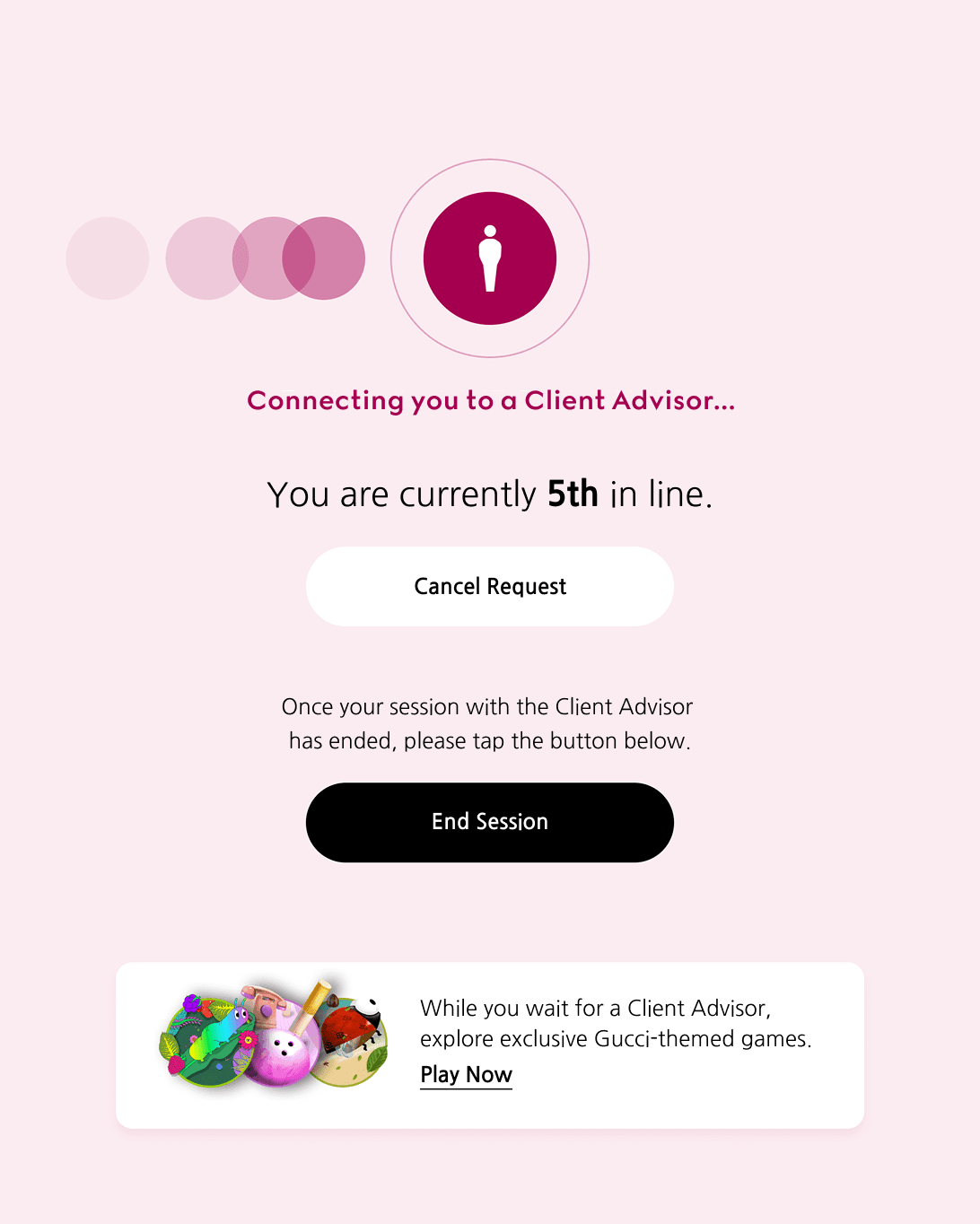
Rigid Waiting Flow

Focusing entirely on the queue order increased perceived wait times and led to app drop-offs.

Validation

Prototype testing: from floors to zones

Prototype testing: from floors to zones

Step 1.

Low-fidelity prototype

Higher Focus on Floor Levels

Higher Focus on Floor Levels

Higher Focus on Floor Levels

Background

Step 2.

High-fidelity prototype

Enhanced Focus on Specific Zones

Enhanced Focus on Specific Zones

Enhanced Focus on Specific Zones

Background

UT Result

In usability tests with 5 visitors, the simplified map made information easier to find. However, it pulled their attention to floor categories rather than individual zones. This showed we needed better zone-level discovery within each floor.

In usability tests with 5 visitors, the simplified map made information easier to find. However, it pulled their attention to floor categories rather than individual zones. This showed we needed better zone-level discovery within each floor.

Solution 1

Solution 1

Focusing on Core Exploration

Focusing on Core Exploration

AS IS

AS IS

Visually distracting map layers

Visually distracting map layers

TO BE

Simplified map with zone-level detail on tap

Simplified map with zone-level detail on tap

Solution 2

Solution 2

Intuitive Product Context Discovery

Intuitive Product Context Discovery

AS IS

AS IS

Detail page lacking indoor location context

Detail page lacking indoor location context

TO BE

Location-integrated detail layout (Full / Fold)

Location-integrated detail layout (Full / Fold)

Solution 3

Solution 3

Engaging Staff Call Experience

Engaging Staff Call Experience

AS IS

AS IS

Call flow that confines focus entirely to queue numbers

Call flow that confines focus entirely to queue numbers

TO BE

Waiting flow with live queue status and nearby content

Waiting flow with live queue status and nearby content

Outcome

Outcome

Visitors stayed longer and explored more

Visitors stayed longer and explored more

Simplifying the map structure increased zone exploration from 31.3% to 74.2%, and average dwell time grew 1.5x.

Simplifying the map structure increased zone exploration from 31.3% to 74.2%, and average dwell time grew 1.5x.

Simplifying the map structure increased zone exploration from 31.3% to 74.2%, and average dwell time grew 1.5x.

Compared 8 weeks before and after release; overall visitor traffic remained stable across both periods.

(*Dwell time shown as a relative change due to confidentiality)

Compared 8 weeks before and after release; overall visitor traffic remained stable across both periods. (*Dwell time shown as a relative change due to confidentiality)

Compared 8 weeks before and after release; overall visitor traffic remained stable across both periods. (*Dwell time shown as a relative change due to confidentiality.)